Exterior Rendering for Real Estate Listings
建築・デザイン· 25分で読めます

Exterior Rendering for Real Estate Listings

Visualizing how a house or building would look on a real site is a key part of every development project.

The tools for doing that have evolved over time. Early concepts may start as sketches, mood boards, reference photos, or simple massing studies. More developed projects often use floor plans, elevations, 3D models, and professional architectural renderings to show the finished exterior before construction starts.

AI exterior rendering is the newest tool in that workflow. Instead of waiting for a full 3D visualization process, agents, land sellers, builders, and developers can turn site photos, sketches, plans, or rough concepts into realistic marketing visuals much faster.

That matters because land and development listings are not marketed the same way as finished homes. Redfin's guide to selling land notes that buyers are evaluating the property's future use: road access, zoning, utility availability, buildability, and development potential. A vacant lot photo rarely communicates all of that on its own.

Good land marketing needs visual context. Array's vacant-lot media guide recommends aerials, boundary clarity, topography, road access visuals, and surrounding context because buyers and builders need to answer a practical question before they visit the site: what can be built here?

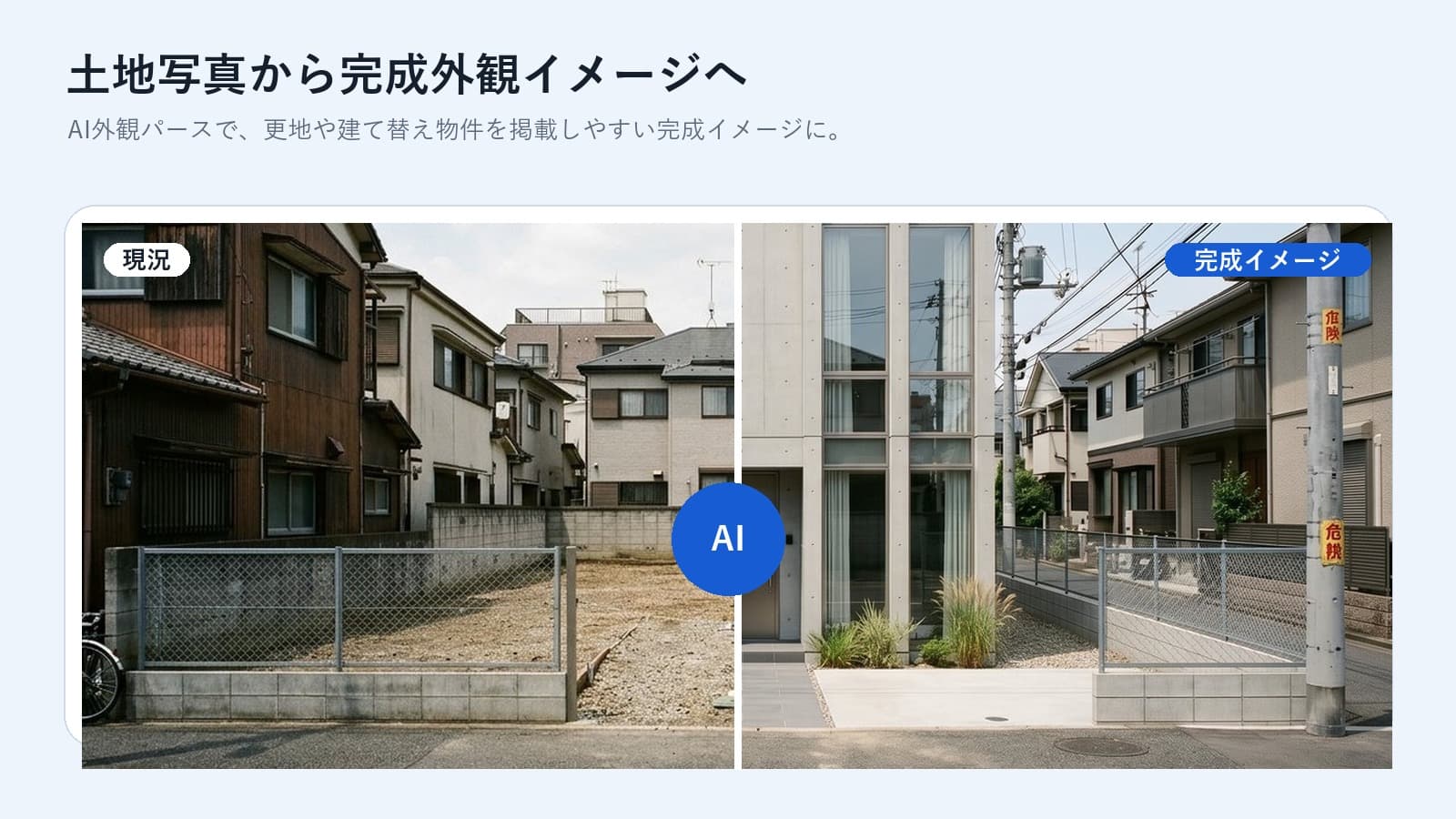
Exterior rendering adds another layer to that visual package. For vacant land, teardowns, renovations, and pre-construction homes, it can show the finished exterior buyers are being asked to consider.

What is exterior rendering for real estate?

Exterior rendering is a realistic visual of a property's outside appearance.

For real estate listings, that usually means showing a proposed home, planned facade, completed renovation, or future build on an existing lot or property photo. The goal is to show the version of the property that the buyer, developer, or builder is evaluating, before the final structure exists.

Exterior renderings can be created from:

  • an existing property photo
  • a vacant land photo
  • a site plan or survey
  • a floor plan or elevation
  • a sketch or concept
  • a reference image for style and materials

Traditional architectural renderings are usually built from detailed 3D models, CAD files, or design plans. AI house rendering can work from simpler inputs and is much faster, which makes it useful for listing marketing, early concepts, and high-volume real estate workflows.

The distinction matters. A listing rendering should help buyers evaluate the property. It should not pretend to be a construction drawing, permit document, or guaranteed final build.

Where exterior renderings fit in real estate marketing

It is hard to get excited about photos of empty land. Most lots look similar in listing results: a street view, trees, grass, dirt, a fence, or an old structure that may not even stay.

Exterior renderings make the listing easier to understand at a glance. Instead of asking buyers to imagine what could be built, you can show a full visual of a potential house and how it would sit on the land.

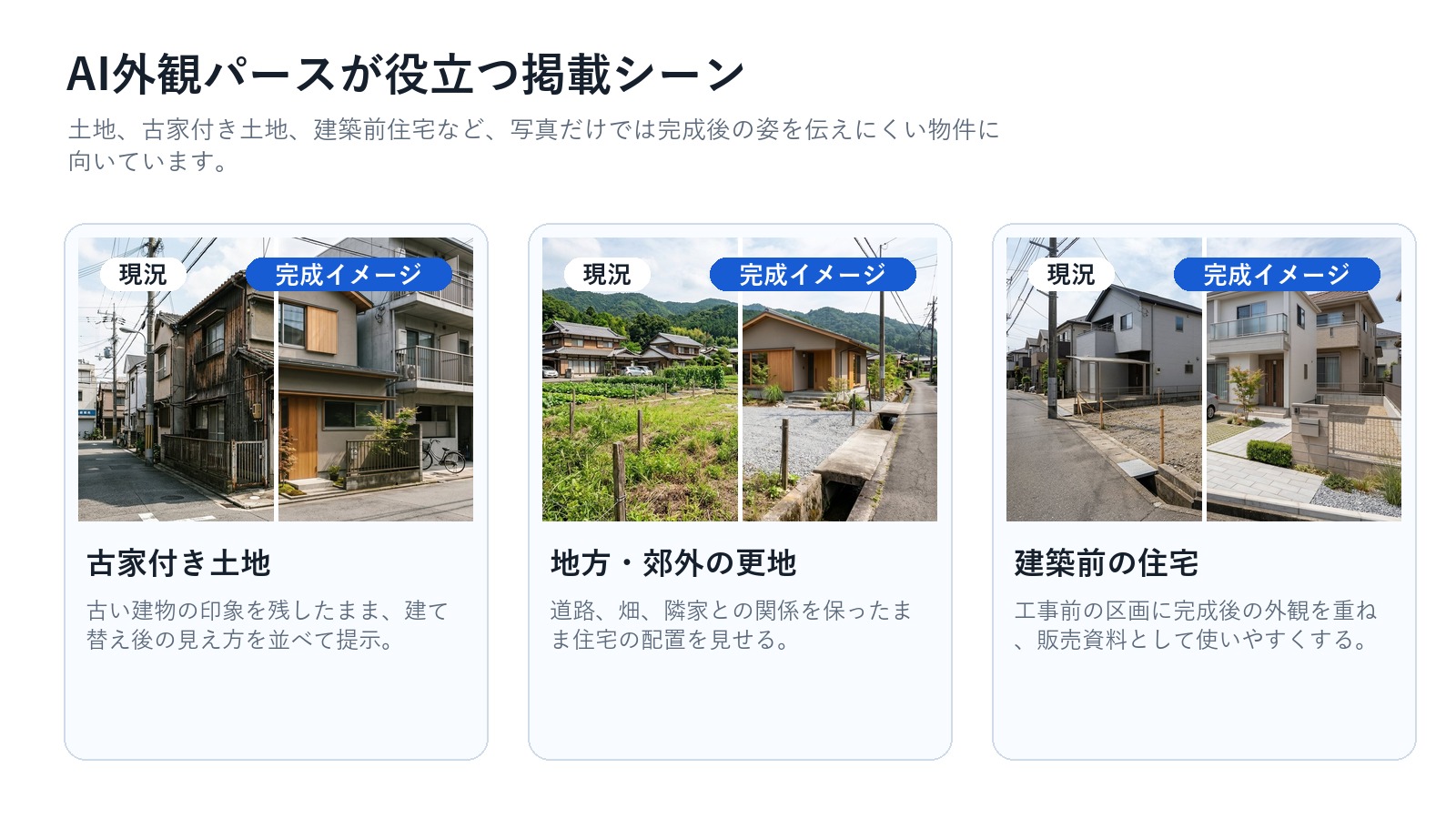
Exterior rendering examples for vacant land, teardown properties, and pre-construction listings

Vacant land

Vacant land is hard to market with photos alone. Buyers see the street, the trees, the slope, maybe a fence or an empty patch of grass. They still need to picture the house, the driveway, the front approach, and the scale of the building on the lot.

An exterior rendering can show how a home would sit on the land, where the driveway might approach, how the front elevation could relate to the street, and what kind of lifestyle the lot can support.

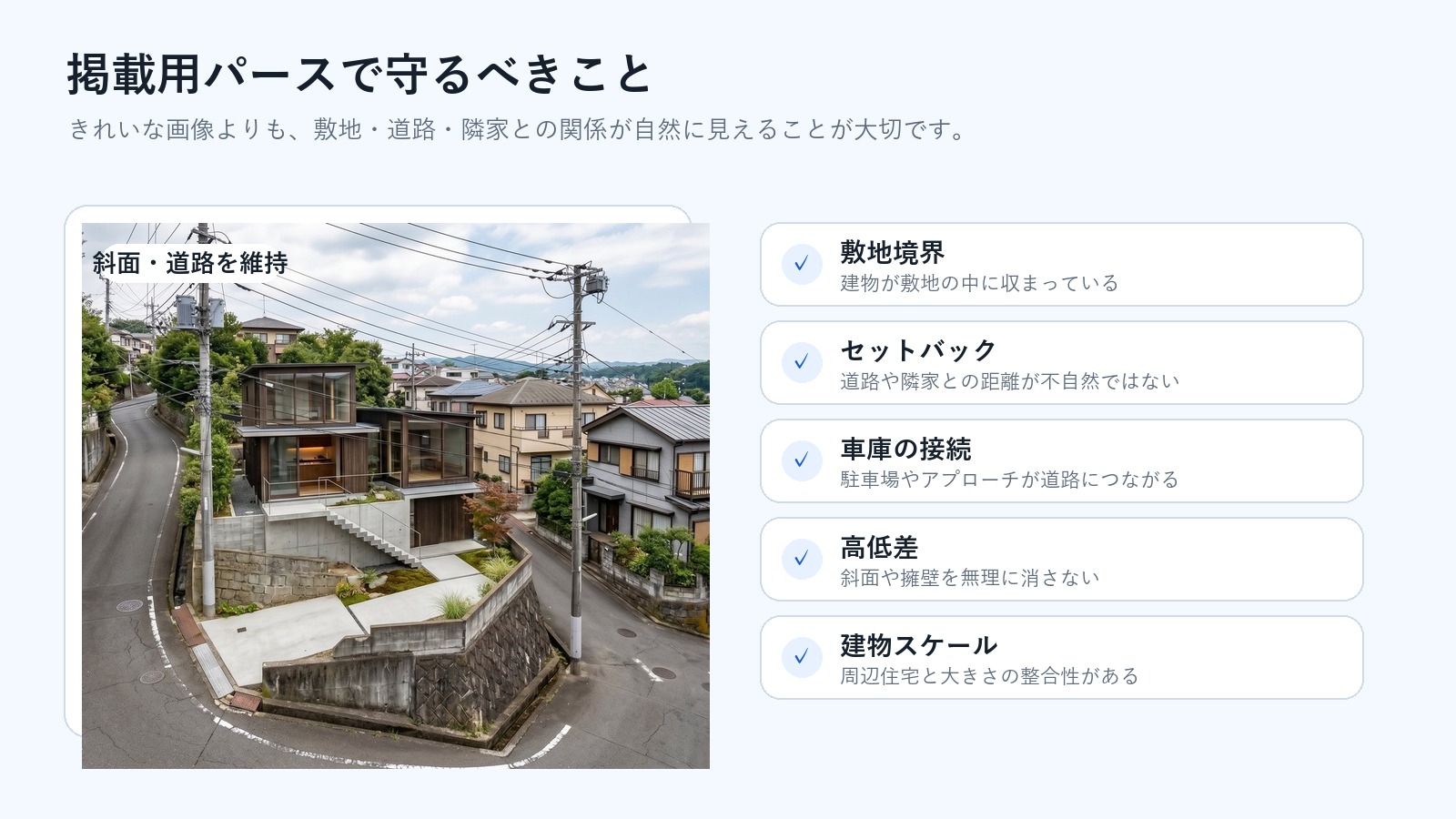
For this use case, the rendering should still respect the site. Setback, slope, road access, neighboring homes, and lot boundaries matter. A beautiful house placed in a physically impossible position does not help the buyer.

For a more focused workflow, see our guide to AI renderings for vacant land.

Teardown properties

A teardown listing usually has two stories: what exists today and what could replace it.

The current exterior photo is still important. Buyers need to know what they are actually purchasing. A rendering adds the redevelopment story: what a new house could look like on that same site.

This works especially well when the lot, neighborhood, zoning, or nearby comparable builds support a clear redevelopment story.

Pre-construction homes

For builders and developers, exterior renderings help market a planned home before construction is complete.

Instead of relying only on floor plans, elevations, or spec sheets, you can show the front exterior, materials, landscaping, driveway, lighting, and street presence of the finished home.

Buyers still need accurate plans, pricing, timing, and disclosures. The rendering gives the listing a clear finished-home image instead of asking buyers to interpret technical drawings.

Planned exterior renovations

Some renovation listings need a clear before-and-after story.

If the seller has planned exterior improvements, or if an agent wants to show a realistic renovation concept, an exterior rendering can show the planned facade directly. This can include new siding, paint, roof color, window style, entryway changes, landscaping, or a more modern facade.

This is where restraint matters. A rendering should show a realistic improvement path, not turn the property into a different house.

Builder and developer marketing

Builders and developers often need to market several homes, lots, or concepts before every property is finished.

Exterior renderings help create consistent marketing visuals across:

  • listing pages
  • sales brochures
  • landing pages
  • social ads
  • investor decks
  • signage
  • email campaigns

For these teams, the value is not only one polished image. It is the ability to create a consistent visual package for every property in a pipeline.

AI exterior rendering vs traditional exterior rendering

AI exterior rendering and traditional architectural rendering can both be useful, but they are not interchangeable.

AI rendering works best when speed, iteration, and marketing flexibility matter. You can test different exterior styles, lighting, landscaping, roof colors, facade materials, or camera angles quickly. For agents and small teams, that makes it possible to create listing visuals without commissioning a full architectural visualization project.

Traditional rendering is better when precision matters more than speed. If the image needs to match exact construction documents, material specifications, engineering constraints, or development approvals, a traditional architectural visualization workflow is usually the safer choice.

For listing marketing, the practical question is simple:

What decision does this image need to support?

If the image needs to help buyers picture a proposed home or renovation in a listing, AI house rendering is often enough. If the image needs to document an exact final design for approvals, construction, or high-stakes pre-sales, use a traditional rendering workflow.

What a good listing rendering should preserve

The strongest exterior rendering is not the most dramatic one. It is the one that makes the proposed build clear without breaking trust.

For real estate listings, pay close attention to:

  • property boundaries
  • setback from the street
  • driveway and road access
  • slope and grade
  • neighboring homes
  • visible utilities and easements
  • tree coverage and major landscaping constraints
  • existing fixed structures
  • views and obstructions
  • scale of the house relative to the lot

This is especially important with AI. A general image model may produce a beautiful house but ignore the land, road, garage approach, or surrounding homes. That kind of image may look impressive at first glance, but it can fall apart when a buyer inspects the listing.

Virtual Staging Art's AI house rendering workflow is built for real estate marketing, where the property context matters. The goal is to create an exterior image that helps the listing, not just a nice-looking house.

Checklist for preserving property details in exterior real estate renderings

Disclosure and listing accuracy

Exterior renderings should be labeled clearly.

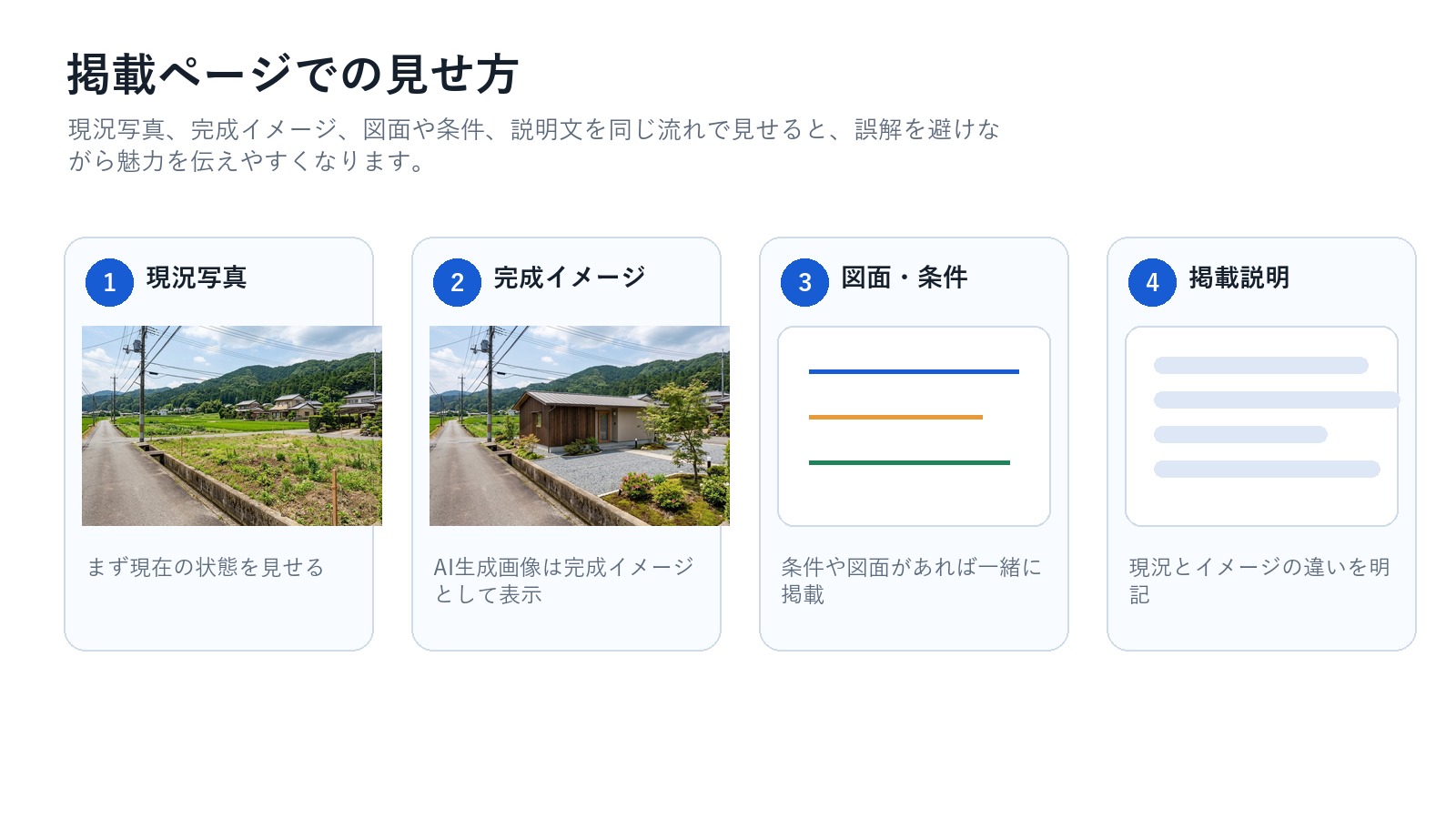
If the image is a rendering, concept, proposed design, or AI-generated visualization, do not let buyers mistake it for a current photo of the property. The safest approach is to include both:

  • the current-condition photo
  • the rendered concept image

Then label the rendered image directly or explain it in the listing remarks.

NAR has warned about buyer frustration when listing images do not match the real property, and it has noted that some states, including California and Wisconsin, have passed disclosure laws for digitally altered property images. Rules also vary by MLS and portal.

The same principle we use for virtual staging applies here: if the visual travels beyond the listing, the disclosure should travel with it.

For a deeper explanation of disclosure workflows, read our guide to virtual staging disclosure and MLS compliance. The article is focused on virtual staging, but the responsible-use principles apply to AI-generated listing visuals as well.

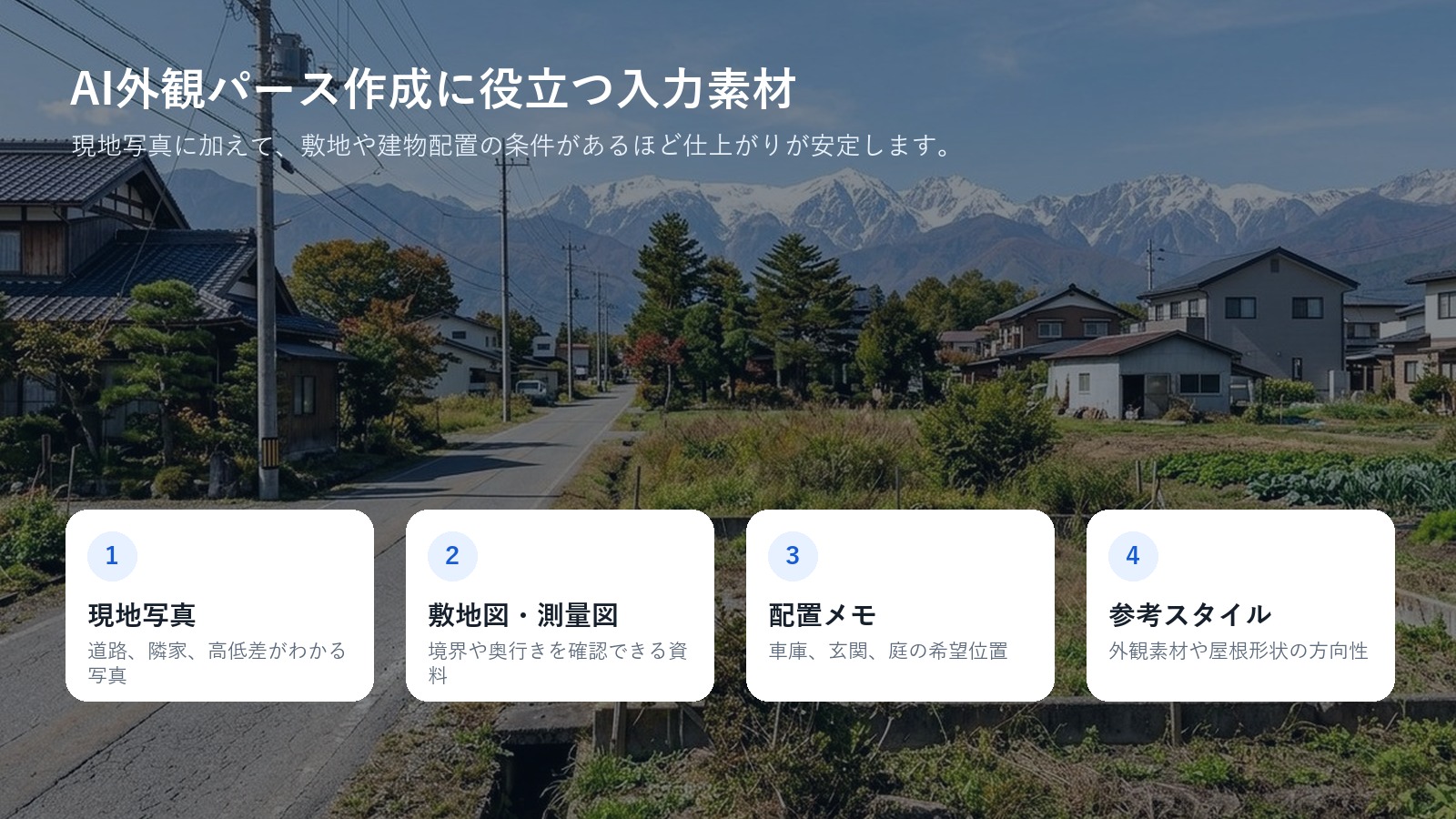
How to prepare inputs for an exterior rendering

The better the inputs, the better the rendering.

Before you generate or commission an exterior rendering, collect:

Input materials checklist for exterior rendering in real estate listings
  • the current exterior or lot photo
  • the address or neighborhood context
  • any survey, site plan, floor plan, or elevation
  • notes about property boundaries and setbacks
  • driveway or road access requirements
  • preferred architectural style
  • material preferences
  • whether landscaping should be minimal, standard, or premium
  • any features that must not be changed

You do not need every item for every rendering. A quick listing concept may only need a strong property photo and clear instructions. A developer or builder image may need plans, elevations, and a more specific material brief.

The important part is to tell the rendering tool what must stay true.

How to use exterior renderings in a listing

Use exterior renderings as part of the listing package, not as a replacement for the listing.

A good sequence usually looks like this:

Practical listing image sequence for exterior real estate renderings
  1. Start with the current property or lot photo.
  2. Add the exterior rendering as a proposed or conceptual visual.
  3. Include floor plans, site plans, or builder information if available.
  4. Explain what is existing, what is planned, and what is conceptual.
  5. Keep the same explanation consistent across MLS, portals, agent websites, social posts, and brochures.

The first image matters, but it should not mislead. For some listings, the rendering is the strongest lead image because it shows the planned build. For others, the current exterior should come first, with the rendering immediately after.

Use judgment based on the listing, the local rules, and the buyer expectation you are setting.

Where Virtual Staging Art fits

Virtual Staging Art gives real estate teams a practical way to create AI house renderings for listing marketing.

You can use it to:

  • turn a vacant lot photo into a realistic home concept
  • show a teardown property with a possible new build
  • create exterior visuals for pre-construction marketing
  • test different facade styles or lighting conditions
  • prepare visuals for agents, developers, builders, and land sellers

It is built for real estate workflows, so the focus is on producing useful marketing visuals quickly, not creating formal architectural documentation.

Explore the AI house rendering product, or see how different teams use it for real estate agents, developers, and home builders.

Final checklist before publishing

Before you use an exterior rendering in a listing, check:

  • Is the image clearly labeled as a rendering or concept?
  • Does the listing include current-condition photos?
  • Does the rendering respect the lot, road, driveway, and neighboring context?
  • Are permits, approvals, and plans described accurately?
  • Are views, amenities, landscaping, and utilities represented honestly?
  • Would a buyer understand what exists today and what is proposed?
  • Does the image follow your MLS, brokerage, and local disclosure rules?

If the answer is yes, exterior rendering can be a strong listing tool. It gives buyers a clearer view of the planned build, gives agents and sellers a better visual story, and makes undeveloped or unfinished properties easier to market.

Frequently Asked Questions

What is exterior rendering in real estate?

Exterior rendering is a realistic visual of a property's outside appearance. In real estate, it is often used to show a planned home, future renovation, new build concept, or completed exterior before the finished property exists.

Can I use exterior renderings in MLS listings?

Often, yes, but the rules vary by MLS, brokerage, portal, and local law. The safest approach is to label the image clearly as a rendering or concept, include current-condition photos, and avoid implying that a proposed design is already built or approved.

Is AI exterior rendering accurate enough for real estate listings?

AI exterior rendering can be useful for marketing visuals, early concepts, vacant land, teardowns, and pre-construction listings. It should not be treated as a permit drawing, construction document, or exact architectural plan unless it is based on verified design documentation and reviewed by the appropriate professionals.

What should I include with an exterior rendering?

Include the current property photo, the rendered concept, and any relevant context such as site plans, floor plans, builder details, or disclosure language. Buyers should be able to tell what exists now and what the rendering is showing.

When should I use traditional architectural rendering instead of AI?

Use traditional architectural rendering when you need precise control over dimensions, materials, lighting, documentation, or formal project presentation. AI rendering is better for faster listing visuals, concept exploration, and marketing workflows.

Can exterior rendering help sell vacant land?

Yes. Vacant land is often difficult to market because buyers have to imagine the future home themselves. A rendering can show how a house could look on the lot, as long as it respects the site, road access, setback, and local constraints.

AIで数分で物件をステージング

バーチャルステージングとハウスレンダリングAIで美しい物件写真を作成

バーチャルステージングAIを見る
After virtual staging
Before virtual staging
元画像
SOURCE: HIGH_RES_RAW_021.JPG
バーチャルステージングAI
99.8% STRUCTURAL INTEGRITY